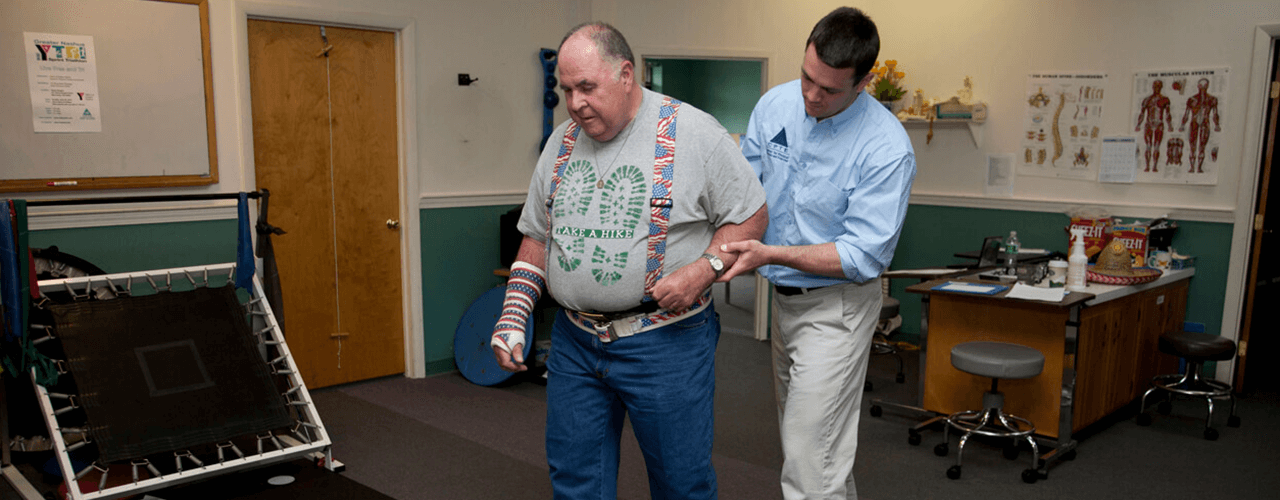
Balance & Stability Issues
Balance and stability are critical for our health, mobility, and safety. Poor balance and stability can impact our independence and longevity. Many times balance and gait disorders sneak up on us. They go undetected or undiagnosed until the problem causes difficulty with movement or a physical injury. The problem escalates to the point that you become distressed and limit or avoid moving as you once did. Please understand there is help and you do not need to live with the problem. Our physical therapists in Nashua, Manchester, Merrimack, Hudson – Lowell Rd, Hudson – Derry Rd, Concord, Pelham, NH or South Nashua, NH are specifically trained in the evaluation and treatment of balance, stability, and gait disorders to help you achieve recovery resulting in improved balance and stability so you can resume your life without fear.
Balance can be affected by:
- GAIT – Your gait refers to the way in which you walk. This includes your stride, how fast you walk, the way that your hips, feet, and legs move together, and how the signals from your body communicate with your brain to help you safely take each step. When a problem develops with your gait, due to an injury or some other abnormality, it can lead to difficulty, discomfort, or imbalance when walking, resulting in increased risk or fear of falling.
- PHYSICAL ABILITIES – Strength, flexibility, and muscular endurance are important for managing daily activities, as well as balance and stability.
- INJURY – Musculoskeletal injuries are a common factor impacting our balance and stability. Injuries to the musculoskeletal system also lead to a decrease in proprioception – the system that tells your body where you are in space.
- VERTIGO & VESTIBULAR ISSUES – Dizziness, headaches, tinnitus (ringing, buzzing, or whooshing noises in the ears or pressure) and motion sickness caused by changes in your vestibular system can impact your balance and stability increasing your risk of falling.
- NEUROLOGICAL DISORDERS – Conditions such as Stroke (CVA), Multiple Sclerosis, Parkinson’s Disease, and Amyotrophic Lateral Sclerosis (ALS) causes significant changes in our muscular, neurological, and proprioceptive systems that greatly affect our ability to move and remain stable.
- MENTAL HEALTH – Anxiety, stress, and depression can affect our focus and alertness leading to a loss of balance and falls. The fear of falling also increases the risk of falling. Confidence is a key component of stability leading to safe walking and mobility.
- ENVIRONMENT – Uneven ground, weather, our home, and what we wear can increase the risk of a fall.
- ALCOHOL
- MEDICATIONS
- SLEEP
How Physical Therapy Helps With Balance and Stability Issues
Physical Therapy is the best solution to improve your balance, promote stability, and restore your confidence when you have balance and stability issues. Physical Therapists are experts in how the body moves and functions, how the body safely moves, and how to correct any issues that interfere with healthy movement and function. Our physical therapists perform a thorough examination to identify the cause of your balance and mobility troubles and prescribe a comprehensive therapeutic program that aids in recovery and prevents further injury and worsening of the problem.
Balance and stability cases are complicated and unique to each patient. These types of impairments are often misdiagnosed or left undiagnosed. At CPTE we have created assessment procedures that capture the full scope of your condition and accurately categorize the root cause of your imbalance, stability issues, and gait problems.
History of your problem: We guide you in describing your problems and symptoms to help us understand your symptoms — the things that make it better and worse, your related medical history, and how this issue has impacted your life. We attempt to discover how and when your symptoms began and how your condition has changed over time.
Neurological Testing: Many balance and gait dysfunctions have relationships with your body’s nervous system. It is often appropriate to perform manual neurological tests to help zero in on the true cause of your symptoms. These are simple tests that can involve the movement of your arms and legs, the muscles and reflexes of your head, and tracking voluntary eye movements.
Vestibular Testing: Many balance and gait dysfunctions have relationships with your body’s vestibular (balance) system. Your physical therapist will perform vestibular tests including hearing tests, testing for inner ear disorder or infection (vestibular), as well as vision tests to help identify all contributing factors leading to your problem. In some cases, abnormal eye movement can contribute to difficulty with balance, but in some situations, the problem is based on something more physical.
Physical Testing: Many balance and gait dysfunctions have relationships with your musculoskeletal system. We often find that a back problem or hip injury is related to your imbalance and difficulty walking. This testing helps to define all areas that need to be addressed to improve your condition.
Your physical therapist will identify the contributing factors that are causing trouble with your balance, stability, and gait. We design a therapeutic program specifically for you to retrain your body to improve your balance, ability to walk and improve your confidence to resume everyday activities safely. Our Physical Therapists will create a comprehensive treatment plan that includes exercises that you can do at home and after treatment is complete. Our goal is to have a positive impact on the quality of your life.
Call the Center for Physical Therapy and Exercise now at Nashua, Manchester, Merrimack, Hudson – Lowell Rd, Hudson – Derry Rd, Concord, Pelham, NH or South Nashua, NH to book an appointment.